

Overview
At the bare minimum, keep an up-to-date medication list and your pharmacy's contact details on paper. Ask about a backup before you're down to the last dose.
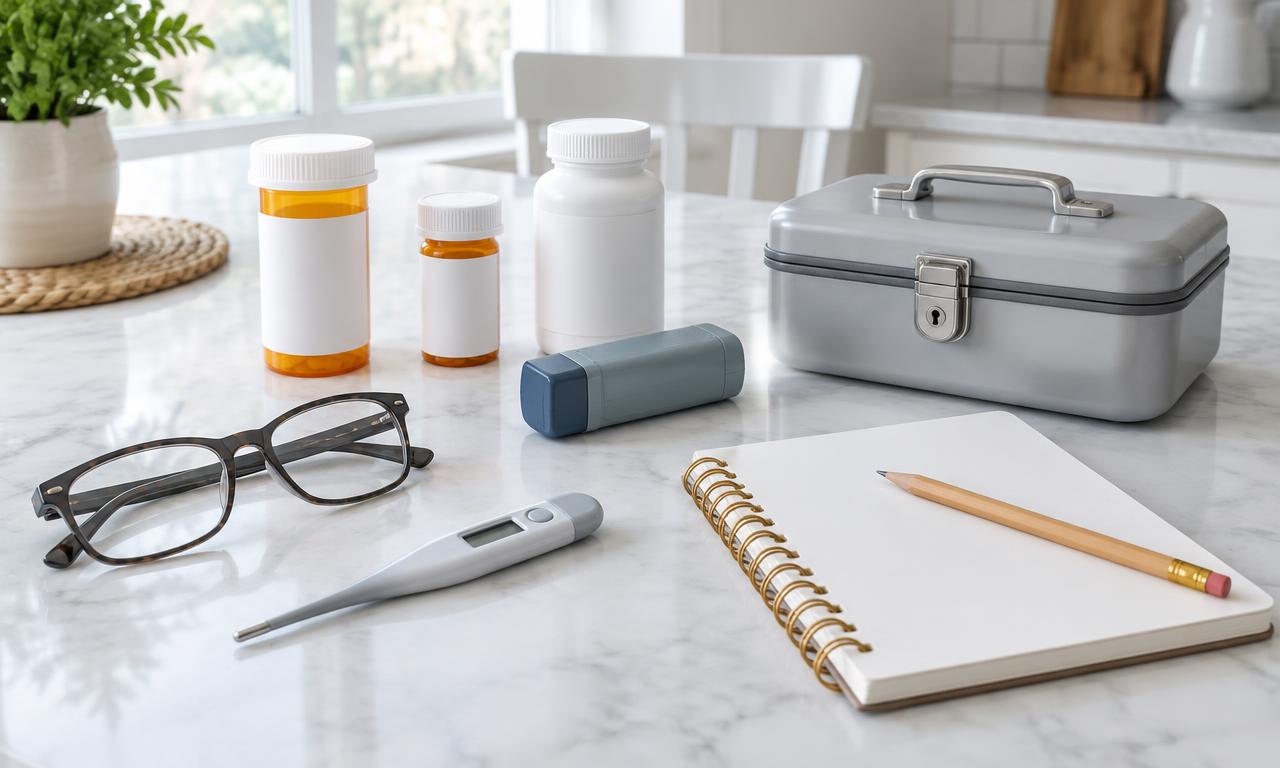
I wouldn't solve this by buying a big selection of pills online. The useful plan starts with the medicines and equipment your household actually uses. Prescriptions, inhalers, glasses, hearing-aid batteries and diabetes supplies may matter more than another pack of bandages. Your pharmacist and prescriber should decide what extra supply is appropriate and how to store it.
What to gather
- Current prescription labels and a written medication list
- Pharmacy, prescriber and emergency contact details
- A secure dry storage place suitable for the medicines' labels
- A transport pouch and any temperature equipment your pharmacist recommends
- A refill calendar and a private copy of prescription information
Step by step
Make one accurate list
Record each person's medicine name, strength, prescribed directions and reason for taking it. Include non-prescription medicines and supplements so the pharmacist can check the complete picture. Add allergies and important equipment needs. Copy the current label rather than relying on memory.
Date the list and update it whenever a prescription changes. Keep a private paper copy with the emergency plan and one for travel. Don't publish it in a shared offline library or put personal health information on the outside of a bag.
Have a specific pharmacy conversation
Explain that you want a realistic plan for an outage or evacuation. Ask when a refill can be requested, whether an extra supply is possible, and how insurance, controlled-drug rules or shortages affect that. There isn't one guaranteed number of spare days that applies to everyone.
Ask what to do if the pharmacy is closed or you leave the area. Record the answer and any alternate contact. Never skip doses, split tablets or change prescribed use to create a reserve, and don't borrow someone else's prescription.
Separate ordinary storage from outage storage
Read the storage instructions for every item. Keep labelled medicines secure and away from children, damp rooms and unsuitable heat. A go-bag by the door may be handy for clothes but unsuitable for a medicine that needs controlled storage.
For refrigerated medicines, ask your pharmacist for a written plan: permitted temperature range, how long the specific product can be out of refrigeration, how to monitor it, and when it should be replaced. Don't improvise a universal cooler time or place medicine directly against frozen packs unless the pharmacist or product instructions permit it.
Plan the last-minute grab items
If medicine must stay in its usual storage, attach a short grab list to the bag: where it is, who collects it, and what transport equipment is needed. Make sure a second adult knows the plan. Keep labelled original packaging where practical so the medicine and directions remain identifiable.
Think about glasses, chargers for medical devices, testing supplies and mobility needs too. If a powered medical device is critical, discuss backup power and emergency arrangements with its care team. A consumer power station alone isn't a complete care plan.
Rotate and review without changing treatment
Use medicines according to the prescription and refill through the normal approved process. Track expiry dates and replace the reserve when the pharmacy advises. Keep the written list in step with the actual containers.
If a medicine was exposed to heat, freezing or an uncertain temperature during an outage, ask the pharmacist before assuming it is still suitable. Return unwanted or expired medicines through a pharmacy's disposal program. Don't keep them as an emergency substitute.
Before you call it done
- The paper medication list agrees with the current prescription labels.
- Refill timing and any permitted extra supply have been discussed with a pharmacist.
- Each temperature-sensitive item has its own approved storage and transport plan.
- A second adult can find the medicines, documents and last-minute grab list.
Things to watch for
This guide doesn't recommend doses, combinations or treatment. Check non-prescription choices, interactions and children's products with a pharmacist.
Don't ration, substitute or share prescriptions. Seek urgent care when needed rather than waiting for the supplies in a kit to solve the problem.
Products to consider
Lockable medicine organizer
For items that permit room-temperature storage; a lock doesn't control temperature.
See on Amazon.caWater-resistant document pouch
Keep a private copy of medication and contact information legible.
See on Amazon.caMin/max thermometer
Only one part of a pharmacist-approved temperature plan, not proof a medicine remains usable.
See on Amazon.ca