

Overview
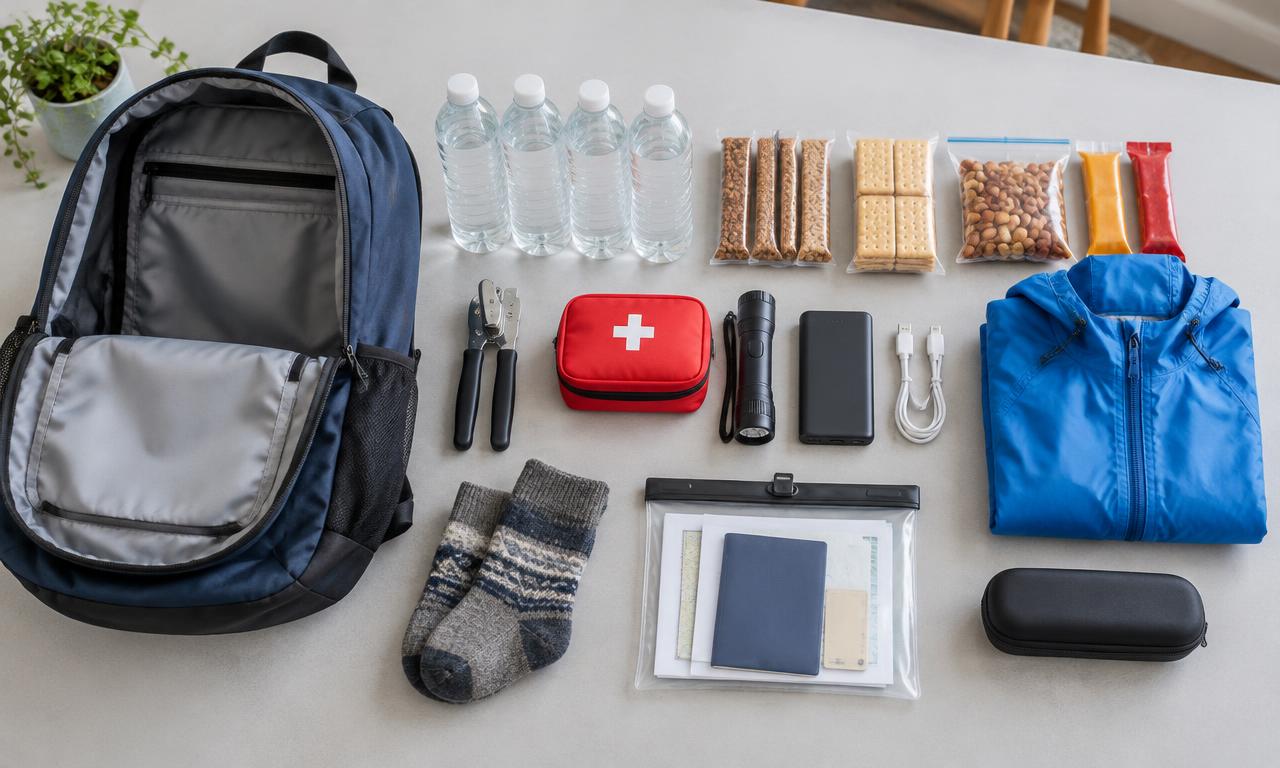
At the bare minimum, gather supplies for the first 72 hours and keep them somewhere easy to reach. A backpack you already own is fine. If carrying a bag is difficult, a wheeled case or help from another person may suit you better.
I'd build this from the household plan rather than a generic survival shopping list. What does each person need if you leave quickly, and what can the family share? This is a starting point for ordinary disruptions, not a promise that three days covers every emergency. Remote communities, local risks and personal care needs may call for more.
What to gather
- A backpack, duffle or wheeled bag each person can manage
- Drinking water and familiar shelf-stable food; manual opener if needed
- Small first aid kit and a medication grab list
- Flashlight, tested phone cable, power bank and compatible spare batteries
- Weather-appropriate clothes, hygiene supplies and glasses or other personal aids
- Private copies of ID and contacts, household plan, spare keys and some cash
Step by step
Decide who carries what
List adults, children, pets and anyone needing help. Assign shared items to the people who can carry them, and keep each person's daily needs accessible. Don't load a child's bag with heavy family equipment or assume everyone can walk the same distance.
Choose two safe meeting places and put the contact plan in each bag. Follow current evacuation directions rather than treating a saved meeting place as safe in every event. Keep a transport plan for someone who uses mobility aids.
Build the water and food plan honestly
Pack manageable drinking water and familiar ready-to-eat foods. The Canadian Red Cross kit list uses 4 L of water per person per day; three days at that rate is 12 L before food or other supplies. That is heavy. A few small bottles pictured in a bag aren't a complete three-day water supply.
Separate what you carry immediately from extra stored water or supplies you can safely transport. Don't assume streams, a shelter or a shop will fill the gap. Use local guidance to plan where additional safe water comes from. Keep the larger home water supply separate and include pet needs.
Pack personal care before extra gadgets
Add a small first aid pouch, suitable hygiene items and the medications or grab list from your pharmacist-approved plan. Include glasses, hearing supplies, baby feeding items and menstrual products where needed. Pick foods that fit allergies and can be eaten without power.
Use sealed labelled packaging and check expiry dates. Keep temperature-sensitive medicine in suitable storage until departure; a note on the bag should say who collects it and how it will travel. Don't duplicate prescriptions without professional advice.
Add light, warmth and paper information
A flashlight or headlamp, tested power bank and the right cable are more useful than several devices that need different chargers. Pack rain protection, warm socks and clothing suited to the season. Keep batteries protected from short circuits.
Put copies of the household plan, contacts and important papers in a water-resistant pouch. Carry only the private information you need and keep it secure. Paper is a fallback when the phone is flat, not a replacement for current official road and shelter information.
Carry it and cut what doesn't work
Try the packed bag indoors and on a safe short walk if your mobility allows. Adjust straps, check that nothing leaks and confirm the person assigned to it can handle the weight. Use a wheeled option or divide the load if necessary, without removing critical personal supplies.
Ask another adult to find the flashlight, first aid pouch and contact card. Note what is awkward to reach. Avoid adding knives, cooking equipment or other heavy tools that don't fit your actual evacuation plan.
Keep it ready for the season
Store it in an accessible dry place, away from unsuitable heat and children's access to hazards. Review it when clothing sizes, prescriptions, contact details or seasons change. Replace used food, charge the power bank and inspect packaging.
Keep the last-minute grab list short and realistic. Practise a calm departure without shutting down critical medical equipment or creating a real emergency call. The goal is to discover missing items now, not during a storm.
Before you call it done
- Each person has a bag or assistance plan suited to their mobility.
- The water plan accounts for more than the small bottles in a backpack.
- Personal medicines, care items and contacts are current.
- Someone else can find the light, first aid pouch and meeting plan.
- Food, clothing and batteries have been checked for the coming season.
Things to watch for
72 hours is a starting point, not a maximum or a guarantee. Follow local guidance and individual care needs.
Never delay an ordered evacuation to finish packing. Avoid carrying loads that create a fall or injury risk.
Products to consider
Comfortable day pack
Try the fit and carrying weight; a bag you own may already do the job.
See on Amazon.caLED headlamp
Test controls and battery compatibility before putting it in the bag.
See on Amazon.caPower bank and matching cable
Check your phone's connector and practise charging it with mobile data off.
See on Amazon.ca