

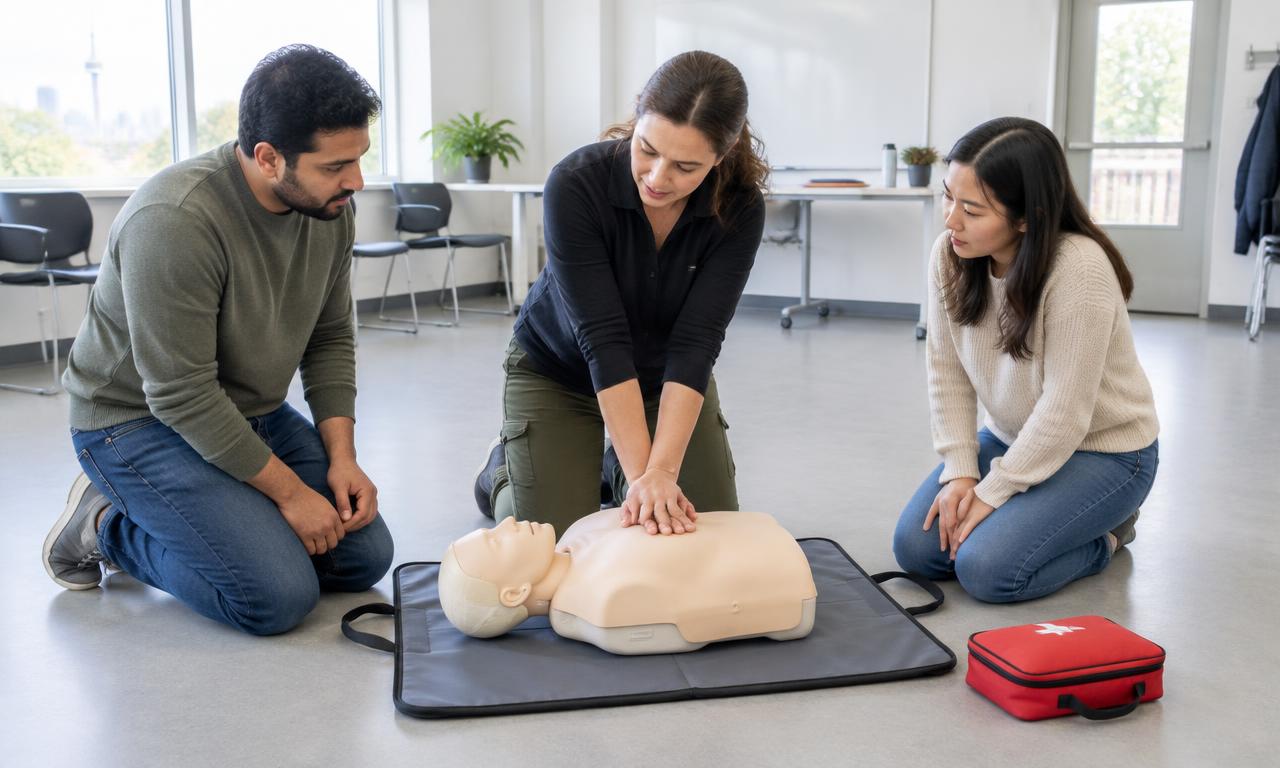
Overview
At the bare minimum, book a recognized first aid and CPR course and make sure another adult knows the household plan. Buying more equipment isn't a shortcut to knowing how to help.
I'd choose a course around the people I'm likely to help: adults, children, babies, or someone with particular care needs. Canadian Red Cross and St. John Ambulance are places to start. Check the actual provider, course level and practical training rather than choosing the cheapest certificate advertised online.
What to gather
- A list of household needs and any workplace requirements
- Time for the practical class and any required online preparation
- A notebook, the course materials and an accessible way to attend
- Your first aid kit contents list to review after the class
Step by step
Decide what the course needs to cover
Look for first aid, cardiopulmonary resuscitation (CPR) and automated external defibrillator (AED) training appropriate to the ages in your household. CPR means helping someone whose heart has stopped; an AED is a device that gives spoken prompts and may deliver a shock when indicated. The class is where you learn how to respond safely.
If you need a certificate for work, childcare or an organized activity, ask that organization which course and provider it accepts before paying. Household usefulness and formal compliance aren't always the same question.
Compare the practical options
Check the official course description and training-partner listing. The Red Cross page now calls its course Intermediate First Aid & CPR; you may still see Standard First Aid in older links or other providers' listings. It includes a range of home emergencies, with hands-on skills and CPR/AED. Confirm whether the CPR level covers adults only or includes children and babies.
Blended training can move some learning online, but confirm the practical session and completion requirements. A general internet video or an online-only badge isn't the same as practising with an instructor. Ask about class size, accessibility and any physical activities you may need adapted.
Book with time to prepare
Confirm dates, location, total learning time, cancellation terms and what to bring. Complete any assigned online portion before the practical class. If possible, have two household adults attend so the plan doesn't depend on one person being home.
Tell the provider about accessibility needs in advance. Bring questions about the supplies you own and the situations you want to prepare for, while keeping private medical details private. The instructor can explain the limits of first aid and when emergency services take over.
Turn the class into a better home kit
After the course, compare your kit with the supplies you learned to use. Replace missing gauze, gloves or tape before buying specialist equipment. Keep the current reference supplied by the course somewhere accessible without internet, respecting the provider's downloading and use terms.
Write a short household plan: who calls 911, who meets responders, where the kit is, and how to describe your location. Find out where AEDs are located in places you regularly visit. Don't operate a real AED for casual practice; use training equipment under instruction.
Refresh skills without creating an emergency
Schedule short household reviews of kit location, contacts and the steps taught in the course. Follow the instructor's guidance on safe practice. Don't practise chest compressions on a healthy person or trigger a real emergency response as a drill.
Check the expiry date on your actual certificate and the provider's renewal rules. The Red Cross Intermediate First Aid page lists a three-year certification, but requirements can differ by jurisdiction, workplace and course. Refresh earlier if you feel rusty rather than waiting for a deadline.
Before you call it done
- The course covers the ages and situations relevant to the household.
- Provider recognition and any workplace acceptance were checked before booking.
- Practical training is included and preparation requirements are understood.
- The kit list, emergency contacts and certificate reminder are updated after training.
Things to watch for
This article isn't CPR or treatment instruction. Learn techniques from a recognized instructor and use current course guidance.
In a real emergency call 911 and follow the dispatcher. Don't delay help while searching a blog or practising an unfamiliar skill.