

Overview
At the bare minimum, keep a first aid kit at home and one in each car. Make sure another person can find them. A sensible starting kit beats a huge bag nobody has opened.
I'd start with the Canadian Red Cross contents list, then fill the gaps in what I already own. A ready-made kit can be a decent starting point. The problem is judging it by piece count: a hundred small bandages don't replace gauze, tape or gloves. This guide is about putting supplies together, not teaching you to treat an injury.
What to gather
- A dry, easy-to-open pouch or box
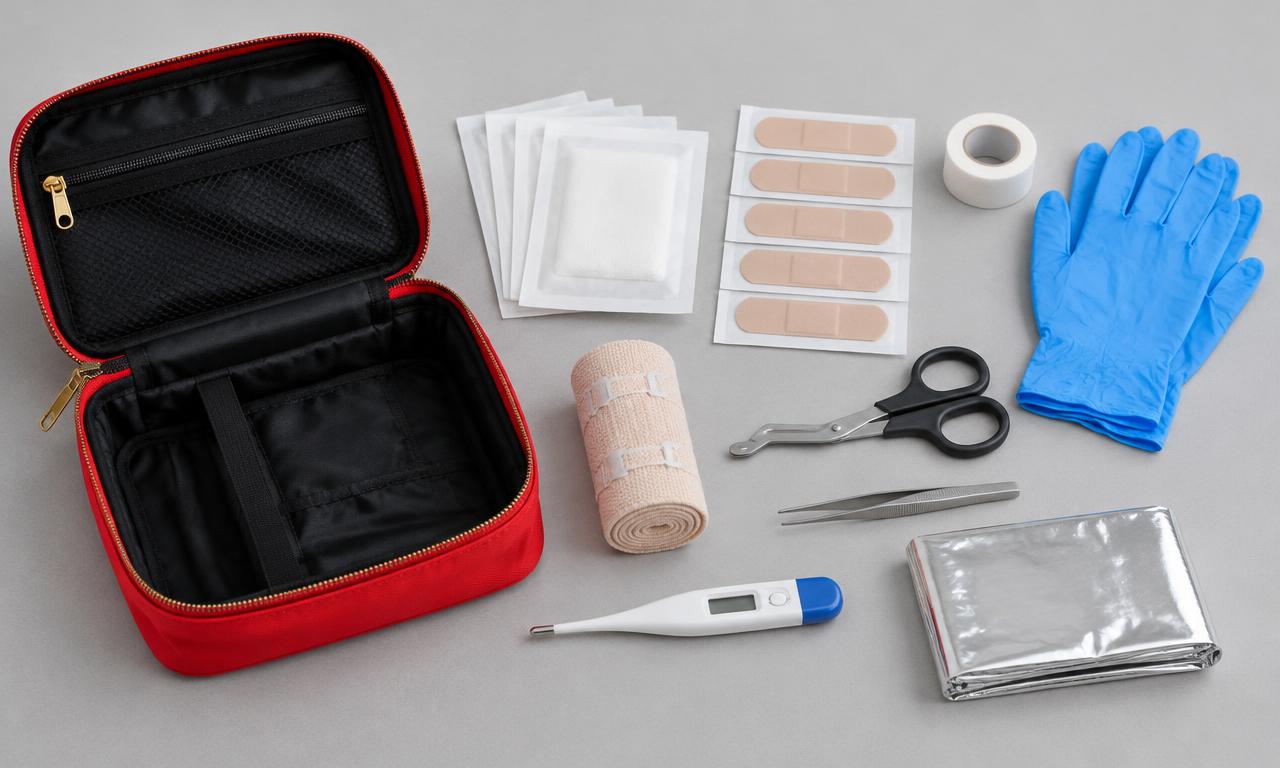
- Sealed sterile gauze in small and large sizes; assorted adhesive bandages
- Medical tape, roller bandages and triangular bandages
- Disposable non-latex gloves; a CPR barrier appropriate to your training
- Rounded-tip scissors, tweezers, instant cold pack and digital thermometer
- Emergency blanket, small flashlight, written contacts and a current first aid reference
Step by step
Empty what you already have
Lay the contents on a clean table. Keep sterile supplies in their unopened packets. Sort them into dressings, protection, tools and information. Discard or replace expired, damaged or opened sterile items rather than packing them because the box looks full.
Write a short gap list before shopping. Check allergies, glove sizes and whether the tape suits the people who will use it. The Health page calculator is a buying estimate, not a medical standard or a guarantee that a particular number of dressings is enough.
Buy the core supplies first
Prioritize different dressing sizes, tape and gloves. Include roller and triangular bandages, scissors and tweezers. Add a thermometer, emergency blanket and light so the kit is usable during an outage. Buy sterile supplies from a reputable seller and check packaging and expiry dates when they arrive.
Keep prescription medicines in a separate, appropriate storage plan. Don't add specialist trauma gear simply to make the pouch look complete. Training and genuine equipment matter more than another pocket full of unfamiliar tools.
Pack for finding things, not for a photograph
Put gloves and common dressings where they are easy to reach. Use a few labelled inner pouches rather than tightly filling every space. Keep a contents list inside the lid, with expiry dates where relevant. Don't open sterile packets for the sake of making everything match.
Store the home kit somewhere dry and accessible to the adults who need it, while keeping medicines and sharp tools away from children. Tell the household exactly where it lives. A lockable medicine box and an accessible first aid pouch can do different jobs.
Make the car kit a separate kit
Don't rely on remembering to move the home pouch each time you leave. Pack a smaller dedicated car kit and secure it so it won't become a loose object during driving. Include written emergency contacts, a light and a blanket alongside the first aid supplies.
An Ontario car can become very hot or very cold. Follow each item's storage instructions; don't leave temperature-sensitive medicines in it. Inspect adhesive supplies and packaging after seasonal temperature swings, and bring sensitive equipment indoors when its instructions require that.
Practise finding the contents
Have a second adult locate the kit, find gloves and identify the different dressing sizes without unpacking everything. Read the reference together and book a first aid course. Practice on training materials, not by applying unfamiliar procedures to a real person.
Write down what you used after any ordinary minor incident and replace it promptly. Set a calendar reminder for a regular contents check and before trips. Keep receipts or a simple shopping list so replenishing one item doesn't mean buying another whole kit.
Before you call it done
- Another adult can find the home and car kits without asking.
- Sterile packets are intact and expiry dates have been checked.
- Gloves, gauze and tape are easy to reach; used items have replacements.
- Storage matches the contents' instructions, including seasonal car temperatures.
Things to watch for
A kit doesn't replace first aid training or emergency care. Call 911 for a serious emergency and follow the dispatcher.
These are household planning suggestions, not workplace compliance instructions. Check the rules for a workplace, boat or organized activity separately.
Products to consider
Empty first aid organizer
Choose a pouch you can open easily, with space for sealed dressings and a contents list.
See on Amazon.caSterile gauze and medical tape
Check sizes, intact packaging, seller and expiry dates rather than just quantity.
See on Amazon.caNon-latex examination gloves
Keep sizes the household can use; check material suitability and storage instructions.
See on Amazon.ca