

Wood heat basics for a winter outage
At the bare minimum, if you have a stove, keep one winter's worth of dry wood and a working CO alarm.
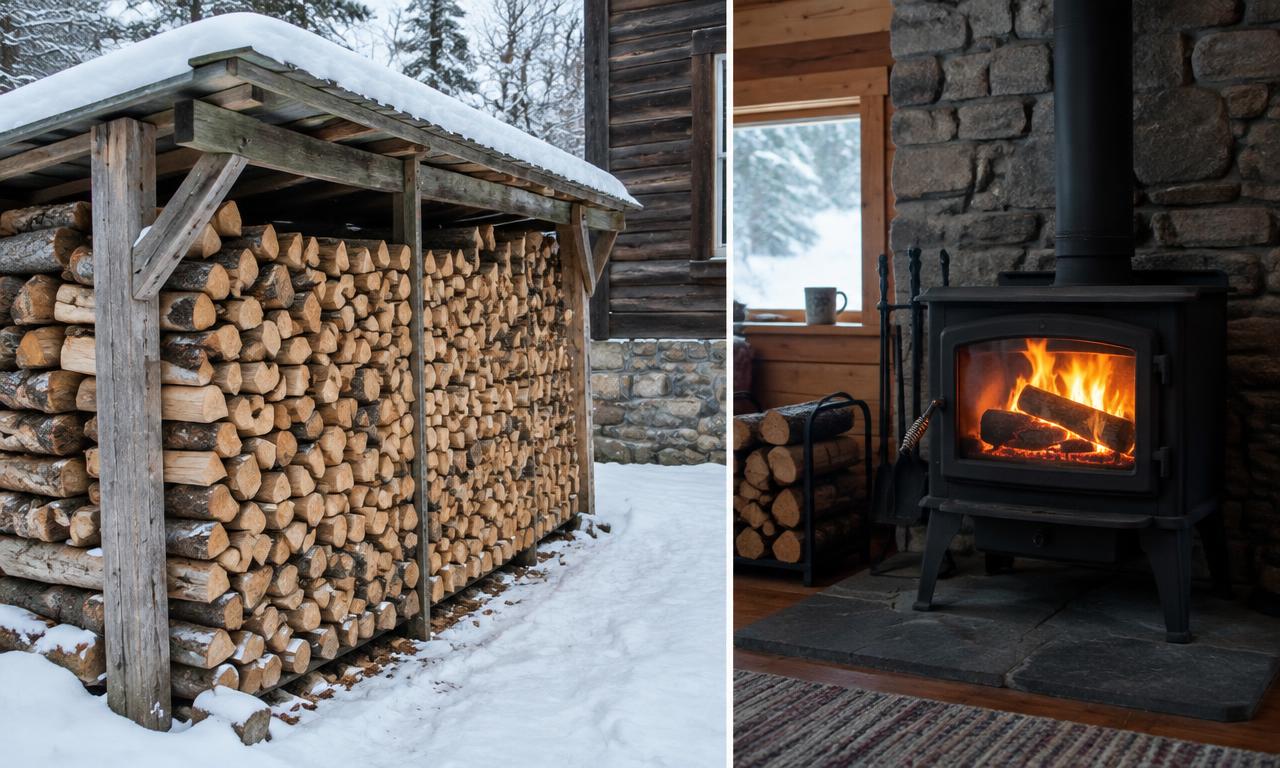
A wood stove is the only heat source that works with no power, no gas and no deliveries. If your home has one, it's the backbone of your winter plan.
The work is in the wood: you need dry, seasoned firewood and enough of it, stored well before the storm.
YOU'LL NEED
- A certified wood stove or insert
- Seasoned firewood (split and dried 6–12 months)
- Kindling and fire starters
- A moisture meter
- A chimney sweep visit each year
Instructions
- Get the chimney checked. Have it inspected and swept every fall. Creosote buildup causes chimney fires.
- Work out how much wood. A stove heating a main floor in a cold snap can burn half a face cord a week. Store at least a few weeks' worth near the house.
- Buy or split early. Wood needs to dry 6–12 months. Buy it in spring for the next winter.
- Test the moisture. Split a piece and check the fresh face with a meter. Under 20% burns hot and clean.
- Stack it right. Off the ground on pallets, bark up, covered on top, open on the sides for air.
- Burn hot, not smoky. Start small and hot with kindling, then add bigger splits. A smoky, smouldering fire wastes wood and builds creosote.
TIPS
- Keep a CO alarm and a smoke alarm in the room with the stove.
- A stovetop fan spreads heat without power.
- You can cook and boil water on top of most stoves.
Products to consider
As an Amazon Associate I earn from qualifying purchases.