

Size a power station for an outage
At the bare minimum, know what you'd plug in before you shop. A short written list saves you hundreds of dollars.
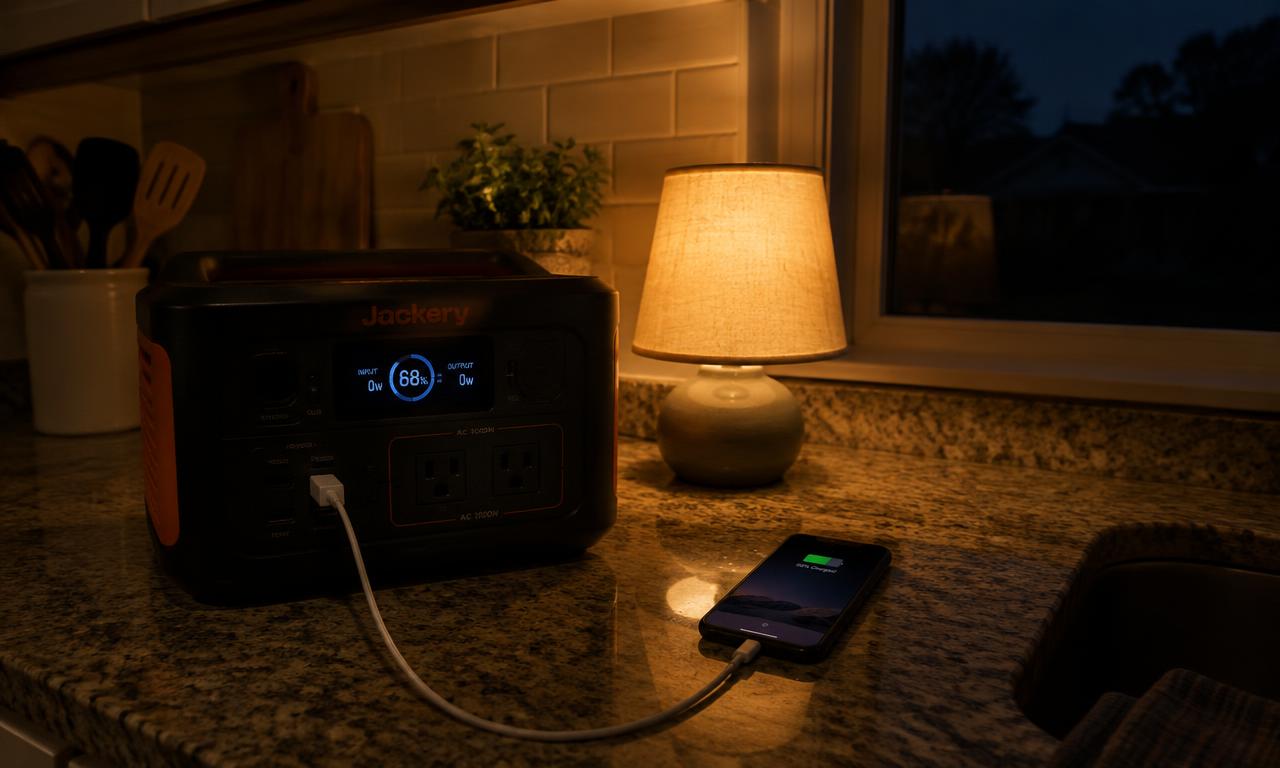
A power station is a big rechargeable battery with plugs. It runs quietly indoors with no fumes, which makes it the easiest backup power for most homes.
The trick is buying the right size. Too small and it's dead by bedtime. Too big and you've spent $1,000 more than you needed. Work it out from what you actually need to run.
YOU'LL NEED
- A list of what you want to power
- The watts on each device's label (or a plug-in watt meter)
- The energy calculator above
- A calculator or pen and paper
Instructions
- List the must-haves. Keep it short: fridge, phone charging, a few lights, internet router, maybe a CPAP or a furnace blower. Leave out heaters, kettles and hair dryers. They drain a battery in minutes.
- Find each device's watts. Check the label or plug it into a watt meter for a day. A modern fridge averages 40–80 W over the day even though it shows 150 W when the compressor runs.
- Work out watt-hours per day. Watts × hours used = watt-hours (Wh). Router 10 W × 24 h = 240 Wh. Fridge about 1,200 Wh a day. Add them all up.
- Add 20% for losses. Inverters waste some power converting battery to wall plugs. Multiply your daily total by 1.2.
- Check the peak. Find the biggest single load (often the fridge or a microwave). The station's output rating in watts must be higher than that, with some room to spare for start-up surges.
- Decide how you'll recharge. Battery size covers day one. Solar panels, a car charger or a generator cover the days after. Plan the recharge before you buy.
TIPS
- LiFePO4 (lithium iron phosphate) batteries last 3,000+ cycles, much longer than older lithium-ion.
- Keep it charged to about 80% and top it up every 3 months.
- A fridge stays cold 4 hours closed. Run it in bursts to stretch the battery.
Products to consider
As an Amazon Associate I earn from qualifying purchases.