

Run a generator safely
At the bare minimum: outside, far from windows, with a battery CO alarm inside. Don't skip any of those three.
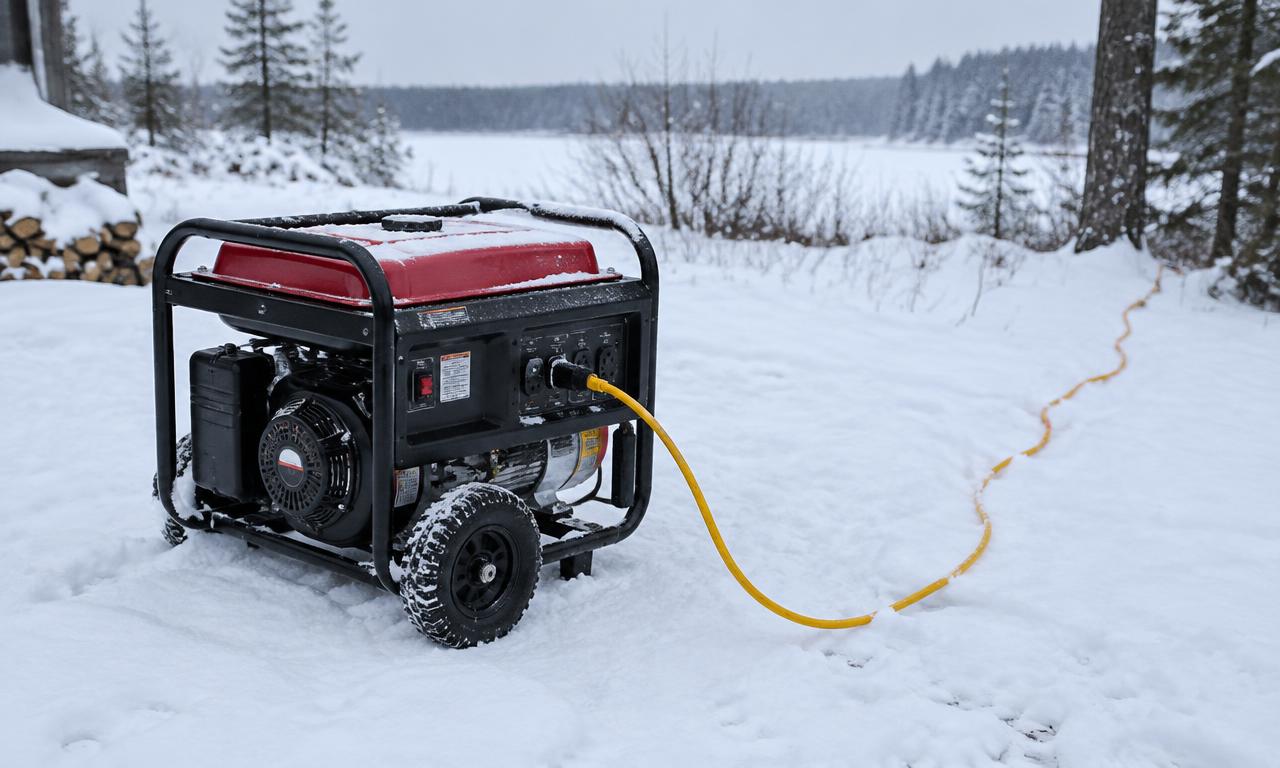
A generator can run your fridge, furnace blower and sump pump for days. It can also kill you in minutes. Carbon monoxide from generators is a leading cause of death after storms.
Every rule here is about distance, fresh air and the right cords.
YOU'LL NEED
- A portable generator
- Heavy-duty outdoor extension cords (12 gauge or thicker)
- Stored gas with fuel stabilizer
- A battery CO alarm on every floor
- Optional: a transfer switch installed by an electrician
Instructions
- Place it far away. At least 6 m (20 ft) from the house, with the exhaust pointing away from doors, windows and vents. Never in a garage, even with the door open.
- Protect it from rain and snow. Use a generator tent or canopy made for it. Water and electricity don't mix.
- Use the right cords. Thin cords overheat. Use outdoor-rated cords sized for the load and run them in through a cracked window or a cord pass-through.
- Never back-feed the house. Plugging a generator into a wall outlet can electrocute line workers and start fires. Use cords, or have an electrician install a transfer switch.
- Refuel cold. Turn it off and let it cool for 15 minutes before adding gas.
- Test it every season. Start it and run it with a load for 20 minutes every 3 months, so you know it works before you need it.
TIPS
- Gas goes stale in 3–6 months. Add stabilizer and rotate it into your car.
- Inverter generators are quieter and safer for electronics.
- If anyone gets a headache, dizziness or nausea, get outside and call 911.
Products to consider
As an Amazon Associate I earn from qualifying purchases.