

Batteries and power banks: the small stuff first
Before you think about a power station, cover the small stuff. Most of what you'll actually use in an outage runs on AA, AAA or a USB cable: flashlights, headlamps, a radio and your phone.
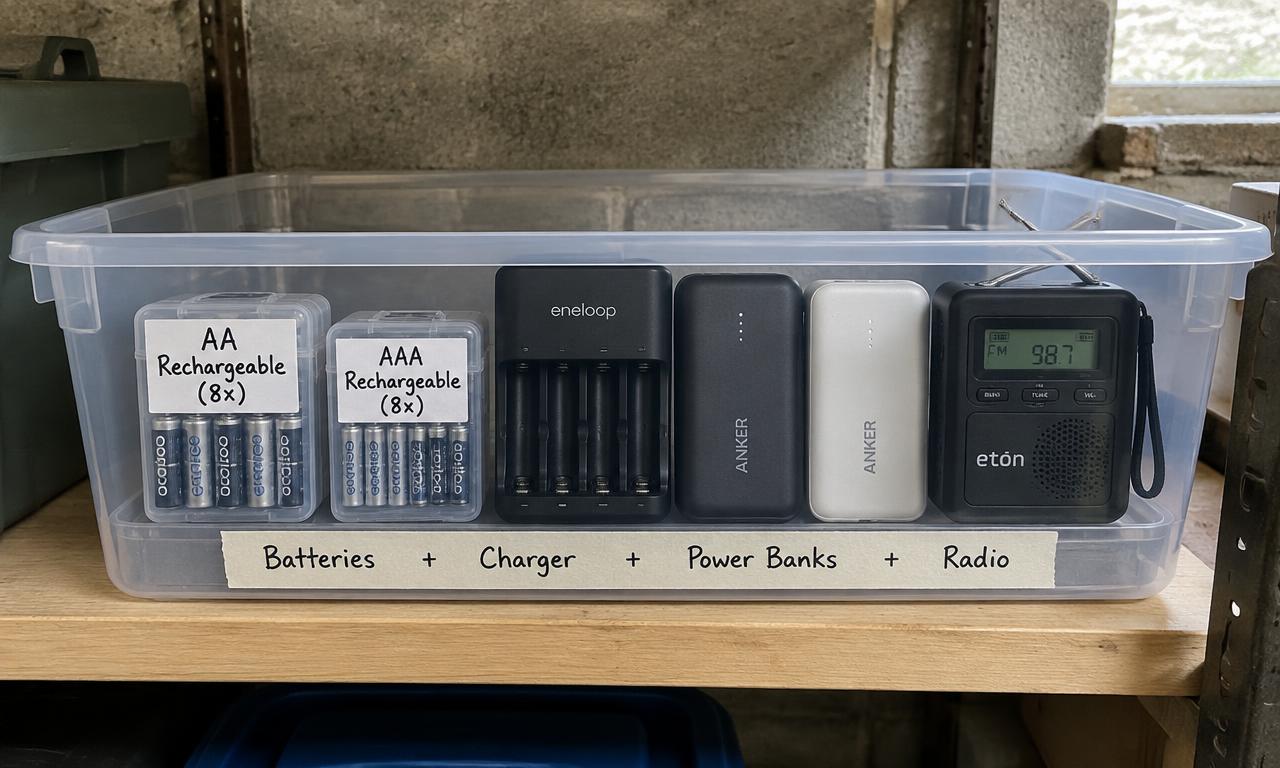
At the bare minimum, keep a bin of batteries and two charged power banks. You can grow from there.
YOU'LL NEED
- A clear storage bin
- AA and AAA batteries (some rechargeable)
- A battery charger
- Two power banks (10,000–20,000 mAh, or milliamp-hours, which is how much they hold)
- The cables your phones use
Instructions
- Write down what runs on batteries. Walk the house and list every flashlight, radio, smoke alarm and remote you'd want. Note the battery size for each. That list is your shopping list.
- Mix regular and rechargeable. Regular alkaline batteries keep for years in a drawer. Rechargeables cost more up front but pay for themselves, and they matter if an outage lasts more than a few days.
- Pick power banks for phones. A 20,000 mAh bank charges most phones three to four times. One per adult is a good start.
- Keep it all in one bin. Batteries, charger, power banks and cables together, labelled, somewhere you can find in the dark.
- Top up every 3 months. Power banks slowly drain on the shelf. Put a reminder in your phone to charge them each season.
TIPS
- Avoid the cheapest no-name power banks. The capacity is often overstated.
- Don't mix old and new batteries in the same device.
- Lithium AA batteries handle Ontario cold far better than alkaline. Use them in the car kit.