

Overview
At the bare minimum, write down who calls whom and where you'll meet. Paper first, gear second.
Good communication starts with a shared plan, not a satellite purchase. Know who each person contacts, what an agreed message means and where to meet if nobody can get through. Use equipment you already own before deciding what a paid satellite service adds.
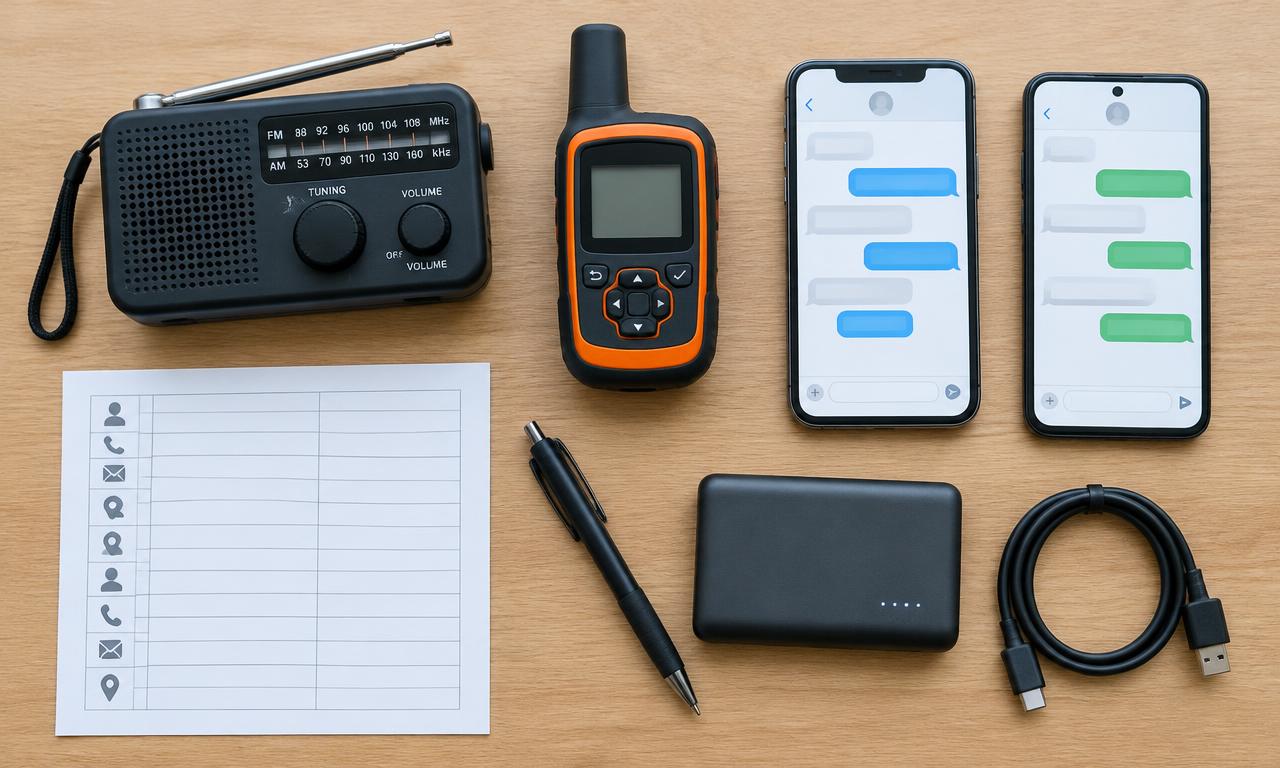
Combine different roles: a battery radio receives public information, a messenger sends brief check-ins, and an internet terminal can connect several devices. None removes the need for written contacts, backup power and official emergency directions.
Setup and preparation
Write down contacts and meeting places
Choose a household contact and an out-of-area contact who agree to the role. List numbers, addresses and two safe meeting places on paper. Keep essential copies with each person; don't put a public list of private numbers into a shared library.
Agree on a short check-in
Decide the information to send: who is safe, current location, next destination and when to expect another message. Agree realistic check-in windows and what to do when one is missed. There is no universal safe waiting period: adapt the plan to the activity and risks.
Prepare phones and information sources
Save contacts and critical information locally, charge power banks and test cables. Identify a local broadcast station for official updates and verify that a battery radio receives it. In congested networks a short text may succeed when a call fails, but delivery isn't guaranteed.
Assign each backup its job
If using inReach, activate the plan and rehearse a normal satellite message. If using Starlink, finish activation, test the sky view and measure power. Teach people the distinction between internet access, a check-in and an actual SOS.
Run a coordinated practice
Tell contacts this is a drill. Disable the usual internet path and phone mobile data where appropriate, test a normal message and confirm the reply. Have another person locate the written plan and charge a device. Don't place an emergency call or SOS just to test it.
Maintain the fallback
Review contacts and subscriptions before trips and when circumstances change. Keep enough independent information to act if a phone, router, server or provider fails. Follow official evacuation instructions rather than treating a meeting point as safe under all conditions.
Check it works
- Everyone can find paper contacts and meeting locations.
- Recipients understand the check-in wording and missed-contact procedure.
- The chosen backup has been used for a normal message and reply.
- A radio and tested charging equipment remain available if internet devices fail.
Things to watch for
A communications drill shouldn't interrupt important household services or trigger a real emergency response.
Follow current local authorities for evacuation and urgent safety information; a saved plan doesn't establish current road or shelter conditions.